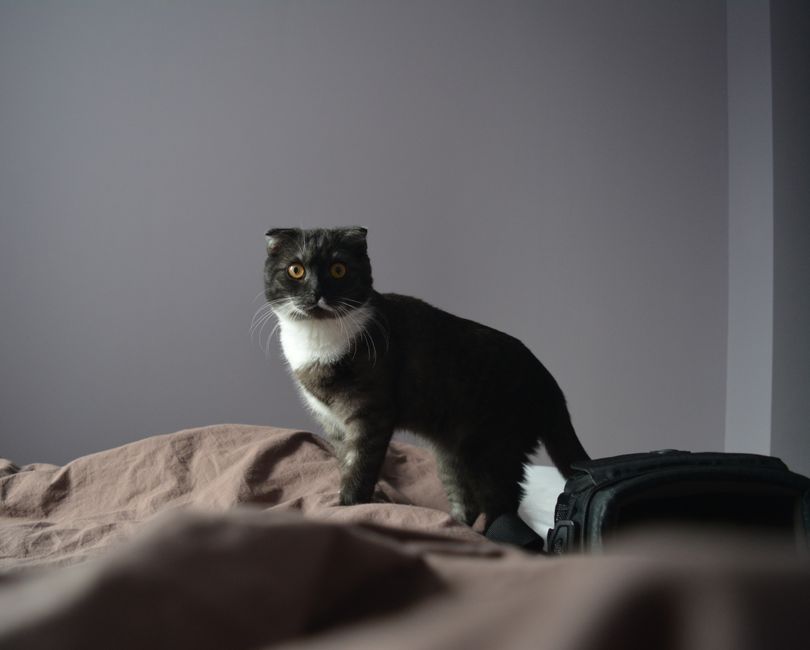
Dogs get all the press when it comes to pet travel. Dog-friendly patios. Dog beaches. Dogs on planes getting their own Instagram moments.
But cats? Cats are having a quiet revolution.
If you're a cat owner who refuses to leave your feline at home, certain cities around the world have become unexpectedly welcoming. Not just tolerant. Actually designed for cats and the people who love them enough to bring them along.
Actually designed for cats and the people who love them enough to bring them along.
Tokyo leads in ways that make sense once you remember this is a city with cat cafes on every other block. But it goes deeper. Many of Tokyo's boutique hotels now offer cat-specific rooms with vertical climbing spaces, window perches, and even separate litter areas that somehow don't feel like you're sleeping next to a bathroom. The Park Hyatt Tokyo and several Keio Plaza locations have rolled out dedicated cat amenities that rival what most hotels offer human guests.

The cultural difference matters. In Japan, traveling with pets is seen as a logical extension of family life, not an inconvenience to be managed.
Barcelona has quietly become the cat capital of Europe for travelers. The city's Gothic Quarter is filled with small boutique hotels that don't just allow cats but actively welcome them. Hotel practices there tend to skip the typical pet fee nonsense and instead offer arrival treats and dedicated sleeping nooks. There's also an understanding that cats aren't dogs. They don't need to be walked through the lobby. Privacy and quiet matter.
A 2024 survey by the European Pet Travel Association found that Spain ranked highest among EU countries for accommodation flexibility with cats, with 68% of surveyed hotels offering no-restriction cat policies compared to the EU average of 41%.

Montreal deserves mention for a different reason. The city's vet infrastructure is designed around the reality that people move with their pets. Clinics near the airport offer pre-travel consults that focus on cats specifically, with low-stress handling techniques and fear-free certification. That might not sound like a travel amenity, but anyone who's tried to get a cat travel-ready knows how much that changes the experience.
Then there's the strange case of Istanbul. It's not a city you'd think of as cat-travel-friendly because most of the cats you see there are strays. But that abundance has created a culture where cats in hotels, restaurants, and even upscale spaces are treated with remarkable nonchalance. If you're traveling with a well-behaved cat, you'll find fewer surprised looks and more shrugs of acceptance.
The truth about traveling with cats is that the biggest barrier isn't the destination. It's the journey itself.
That's where working with a company like Avolar Pets changes the equation. Most people assume cats can't handle transport, but the real issue is almost always preparation. Cats need gradual crate acclimation, proper vet documentation, sometimes even light sedation discussions with a trusted veterinarian. When those pieces are handled professionally, cats travel far better than their reputation suggests.
The cities that rank highest for cat travel aren't necessarily the ones with the most tourist infrastructure. They're the ones that understand cats aren't small dogs. They need different things. Quiet rooms. Vertical space. Patience.
If you've been putting off a trip because you can't imagine leaving your cat behind, it might be time to reconsider what's possible. The world is slowly catching up to what cat people have always known.
Some family members just happen to have four legs and a serious preference for window seats.